Passive Homes in Auckland
Improving the performance of Auckland homes with Quality Build’s passive homes.
Improve your home’s performance with Quality Build’s passive homes. Passive homes are an investment in comfort, health, and energy efficiency. They tackle the big challenges Auckland families face—rising power costs, damp homes, and respiratory issues—while future-proofing your property.
What is a passive home?
A passive home (or passive house) is a building that achieves exceptional energy efficiency and comfort through intelligent design rather than relying on conventional heating and cooling systems.
Developed in Germany and refined over three decades, the passive house standard represents the gold standard in sustainable, low-energy building worldwide. Unlike standard homes that waste energy through poor insulation, air leaks, and inefficient ventilation, a passive home is designed as a complete system where every element works together. The result is a home that uses up to 90% less energy for heating and cooling compared to a conventional New Zealand home, while providing superior comfort, healthier indoor air quality, and significantly lower running costs.
The Five Key Principles of passive house design:
1. Superior Insulation
Passive homes feature continuous, high-performance insulation throughout the entire building envelope, eliminating thermal bridges and heat loss. Wall insulation typically ranges from R4.0 to R6.0, with roof insulation reaching R7.0 or higher, far exceeding standard building code requirements.
2. Airtight Construction
The building envelope is constructed to be exceptionally airtight, preventing unwanted draughts and heat loss. Every junction, penetration, and connection is carefully detailed and sealed. This isn’t about sealing the home off from fresh air, it’s about controlling exactly where and how air enters and exits.
3. High-Performance Windows and Doors
Triple-glazed windows with insulated frames eliminate cold spots and condensation while maximising natural light. These windows typically achieve U-values of 0.8 W/m2K or better, compared to 2.6-3.0 for standard double glazing in New Zealand.
4. Thermal Bridge-Free Design
All structural elements are designed to eliminate thermal bridges (areas where heat can escape more easily). This means no cold spots, no condensation issues, and no wasted energy.
5. Heat Recovery Ventilation (HRV/ERV)
A mechanical ventilation system with heat recovery provides continuous fresh air while recovering up to 90% of the heat from outgoing stale air. This means you get fresh, filtered air throughout your home without losing warmth in winter or coolness in summer.
How passive homes differ from standard New Zealand builds:
While a standard New Zealand home built to current building code might achieve energy efficiency of around 150-200 kWh/m2/year, a certified passive home achieves less than 15 kWh/m2/year for space heating.
This dramatic difference means a passive home typically requires only a small supplementary heater even in the coldest weather, and in Auckland’s climate, many passive homes need no dedicated heating system at all. The design process for a passive home begins with careful consideration of orientation, solar gain, and climate-specific factors. Sophisticated energy modelling software (PHPP – Passive House Planning Package) is used to optimise every design decision, ensuring the completed home will meet the stringent passive house standard before construction even begins.
New Build or Retrofit – The Choice is Yours
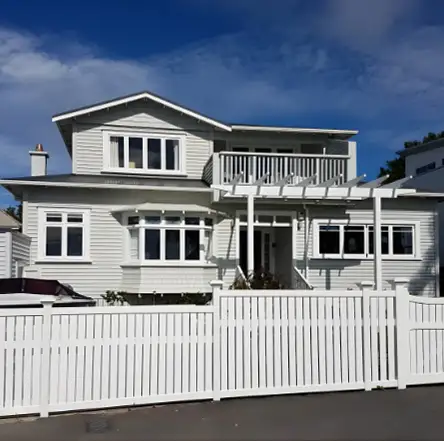
You don’t have to build a new house to enjoy passive home benefits. Quality Build can retrofit your existing Auckland home, villa, or bungalow to improve insulation, airflow, and overall performance. If full passive house certification isn’t in your budget, we’ll help you make smart adjustments—like upgrading cladding, roofing, and ventilation—to achieve a healthier, more efficient home.
The benefits of building a passive home in Auckland
Energy Savings That Transform Your Running Costs:
The most immediate benefit homeowners notice is the dramatic reduction in power bills. A passive home in Auckland typically uses 80-90% less energy for heating and cooling compared to a standard home of the same size.
For a typical 200m2 family home, this translates to power bill savings of $2,000-$3,500 per year. While the upfront investment in passive house construction is typically 5-10% higher than standard building, the energy savings mean this premium pays for itself within 8-12 years. Given that mortgage rates are often lower than the return on energy savings, the financial case for passive house construction is compelling. Over a 30-year mortgage period, the total cost of ownership (mortgage plus energy costs) is often lower for a passive home. In Auckland’s climate, many passive homes require no dedicated heating system whatsoever. The combination of good solar orientation, high-performance building envelope, and heat recovery ventilation means the home stays comfortable year-round with minimal energy input. Any supplementary heating required can typically be provided by a small, efficient heat pump or even a plug-in panel heater.
Superior Health and Comfort:
Passive homes maintain remarkably consistent temperatures throughout. Unlike conventional homes where bedrooms might be cold while living areas are overheated, a passive home typically sees temperature variation of no more than 2-3 degrees between rooms. This eliminates cold spots, draughts, and the need to close off unused rooms in winter. The continuous mechanical ventilation with heat recovery provides filtered fresh air throughout the home, removing pollutants, allergens, and excess moisture. This is particularly beneficial for family members with asthma, allergies, or respiratory conditions.
The fresh air supply also eliminates stuffiness and reduces cooking odours and bathroom humidity. Passive homes are notably quieter than conventional homes. The airtight construction and high-performance windows significantly reduce external noise from traffic, neighbours, or aircraft. This creates a peaceful indoor environment that occupants consistently identify as one of the most appreciated features.
Superior Health and Comfort:
Passive homes maintain remarkably consistent temperatures throughout. Unlike conventional homes where bedrooms might be cold while living areas are overheated, a passive home typically sees temperature variation of no more than 2-3 degrees between rooms. This eliminates cold spots, draughts, and the need to close off unused rooms in winter. The continuous mechanical ventilation with heat recovery provides filtered fresh air throughout the home, removing pollutants, allergens, and excess moisture. This is particularly beneficial for family members with asthma, allergies, or respiratory conditions.
The fresh air supply also eliminates stuffiness and reduces cooking odours and bathroom humidity. Passive homes are notably quieter than conventional homes. The airtight construction and high-performance windows significantly reduce external noise from traffic, neighbours, or aircraft. This creates a peaceful indoor environment that occupants consistently identify as one of the most appreciated features.
Environmental Impact and Future-Proofing:
By using up to 90% less energy, passive homes dramatically reduce household carbon emissions. For environmentally conscious homeowners, this represents one of the most impactful personal actions possible for climate change mitigation. As New Zealand continues to strengthen building efficiency standards and as energy costs inevitably rise, passive homes are future-proofed. The Passive House Standard already exceeds likely building code requirements for decades to come.
Resilience and Long-Term Value:
In a power cut, a passive home’s superior insulation means it stays comfortable far longer than a conventional home. The building envelope acts like a giant thermos, maintaining liveable temperatures for days rather than hours. The resale value of passive homes is increasingly recognised in the market. As energy efficiency becomes more important to buyers and as running costs feature more prominently in purchasing decisions, passive homes command premium prices and sell faster than comparable conventional homes.
PHINZ-Certified Passive House Builders
Quality Build are certified by Passive House Institute New Zealand (PHINZ), the official organisation responsible for maintaining passive house standards and certification in New Zealand. What PHINZ Certification Means for You: Our certification demonstrates we have completed comprehensive training in passive house principles, building science, and the specific technical requirements for achieving verified performance. This isn’t a weekend course, it represents hundreds of hours of study and practical experience. As PHINZ-certified builders, we understand the precise detailing, sequencing, and quality control required at every stage from foundation to final seal. We know how to prevent thermal bridges, achieve airtightness targets, optimise ventilation systems, and verify performance through testing. Working with a PHINZ-certified builder means your passive home will be designed using the internationally recognised PHPP (Passive House Planning Package) software, ensuring predicted performance is accurate and achievable. It also means your completed home can achieve formal Passive House certification if desired, providing independent verification of performance and adding significant resale value. Quality Build is one of only a small number of PHINZ-certified builders in Auckland, and we’re proud to be at the forefront of high-performance, sustainable building in New Zealand.
Understanding Passive Home Costs and Investment
The investment required for a passive home in Auckland typically represents a 5-10% premium over standard construction to the same design and specification level.
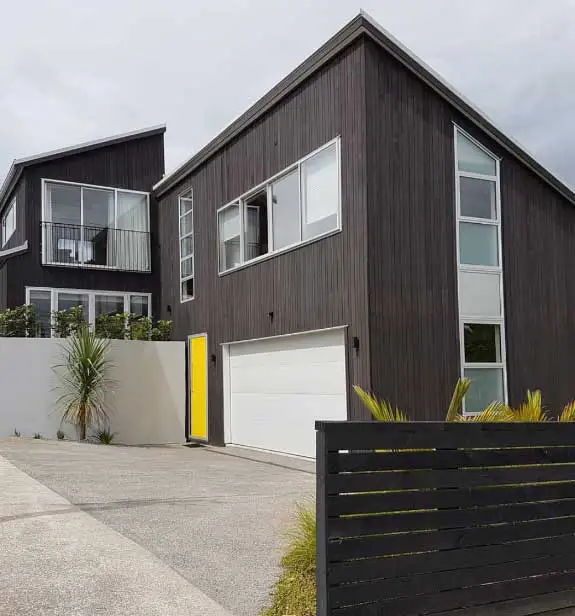
For a 200m2 family home, this might mean an additional $50,000-$100,000 in construction costs. However, this comparison is somewhat misleading because passive homes deliver features and performance that simply aren’t available in standard builds. A more accurate comparison would benchmark the passive home against a standard home with all the following added:
- Premium insulation throughout
- High-end triple-glazed windows
- Whole-house ventilation system
- Enhanced airtightness
- Thermal bridge-free construction.
The cost premium is primarily driven by:
– High-performance windows and doors (typically 40-50% of the premium)
– Enhanced insulation and air-tightness detailing (25-30%)
– Heat recovery ventilation system (15-20%)
– Additional design and modelling time (5-10%)
– Quality assurance testing (blower door, thermal imaging)
Many passive home owners find they can reduce or eliminate other costs that would be required in a standard home, such as heat pumps in every room, extensive heating infrastructure, or cooling systems. When these savings are factored in, the true cost premium narrows significantly. The financial return comes from several sources. Energy savings typically provide a direct return of 8-12% per year on the additional investment. Given current mortgage rates, this means the energy savings can more than cover the additional mortgage cost. Over time, as energy prices increase, this return improves further.
Quality Build provides detailed cost estimates specific to your project during the design phase. We can model different levels of passive house performance and help you understand the cost-benefit trade-offs to make informed decisions that align with your budget and priorities. For many of our clients, the decision to build passive isn’t purely financial. The superior comfort, health benefits, environmental impact, and pride of ownership in a truly high-performance home are factors that numbers alone can’t capture. That said, the financial case for passive house construction in Auckland is stronger today than it has ever been.
Whether you want to retrofit your existing home or build a passive home from scratch, Quality Build can create a future-proofed, healthy and high-performing home that you and your family will enjoy for many years to come.
Hear from our happy clients
“No Hidden Costs”
“Nathan was really open and honest and didn’t promise the earth. He’s so forthcoming, as is his team. He’s a good guy that helps out and makes sure that things get done. Nathan’s so transparent with budget, there’s no hidden costs that come through. It’s clear from his team that everyone’s happy – you can tell that they’re respected and treated really well. The process makes such a difference… hundred per cent I would recommend him. I think he is a great operator.”
Andrea – Okura Renovation
Passive Homes Frequently Asked Questions
A passive home in Auckland typically costs 5-10% more than standard construction to the same design specification. For a 200m2 family home, expect an additional investment of $50,000-$100,000. However, annual energy savings of $2,000-$3,500 mean this premium pays for itself within 8-12 years, and the total cost of ownership over a 30-year mortgage period is often lower than a conventional home when energy costs are included.
The construction timeline for a passive home is typically 2-4 weeks longer than standard construction due to the additional attention to detail required for airtightness, thermal bridge-free construction, and quality assurance testing. For a typical residential project, expect 8-10 months from consent to completion. The design and consenting phase may take slightly longer to accommodate PHPP modelling and detailed specifications.
While achieving full passive house certification in a retrofit is extremely challenging and often not cost-effective, you can apply passive house principles to significantly improve your existing home’s performance. This might include upgrading to high-performance windows, adding superior insulation, improving airtightness, and installing heat recovery ventilation. We call this a “deep energy retrofit” and it can reduce energy consumption by 50-75% even if it doesn’t achieve full passive house standard.
Quality Build can assess your existing home and recommend the most cost-effective improvements.
The direct financial return from energy savings typically provides 8-12% annual return on the additional construction investment. However, the total return includes increased resale value, faster sale times, reduced maintenance costs (no heat pumps in every room to service), greater resilience to power price increases, and improved comfort and health outcomes that have real but harder-to-quantify value.
Passive homes use largely the same materials as standard construction, but with more rigorous attention to quality and installation. The main specialty items are triple-glazed windows (which we source from New Zealand and international suppliers), specialised tapes and membranes for the airtightness layer, and heat recovery ventilation units. All of these are readily available in New Zealand and are proven technologies with long track records.
Every Quality Build passive home undergoes blower door testing to verify airtightness meets the required standard (typically 0.6 air changes per hour at 50 Pascals pressure). We also use thermal imaging to identify any areas of concern before final close-up. The PHPP modelling software has been validated against thousands of completed projects internationally and provides highly accurate performance predictions. If you choose to pursue formal Passive House certification, this provides independent third-party verification of performance.
When properly designed, passive homes in Auckland’s climate remain comfortable year-round without active cooling. The design process includes overheating analysis using PHPP software, ensuring adequate shading, appropriate window sizing and orientation, and night-time ventilation strategies. The continuous fresh air supply from the ERV system, combined with the stable thermal mass, means most Auckland passive homes stay comfortable even during our warmest weather. If additional cooling is desired, the excellent insulation means a small, efficient heat pump can easily handle the entire home.
Your passive home journey with Quality Build
1. Initial Consultation (Free):
We discuss your vision, site, budget, and timeline. We explain passive house principles and help you understand if passive construction aligns with your goals.
2. Design Development:
Working with your architect (or we can connect you with passive house-experienced architects), we develop the initial design with passive house principles integrated from the start. This includes PHPP modelling to optimise orientation, window sizing, insulation levels, and ventilation strategy.
3. Detailed Documentation:
We create comprehensive construction documentation with the precise detailing required for passive house construction. Every junction, penetration, and material transition is drawn and specified.
4. Consent and Approvals:
We manage the building consent process, providing Auckland Council with the documentation and calculations they require.
5. Construction with Quality Assurance:
We build your home with continuous quality control. Key milestones include foundation inspection, framing and airtightness layer installation, window installation, insulation, and pre-closeup blower door testing.
6. Testing and Commissioning:
Before final close-up, we conduct blower door testing and thermal imaging to verify performance. The heat recovery ventilation system is commissioned and balanced.
7. Handover and Education:
We walk you through your new home, explaining how to operate and optimise the systems for maximum comfort and efficiency.
8. Certification (Optional):
If desired, we complete the documentation for formal Passive House certification through PHINZ.
Our Services
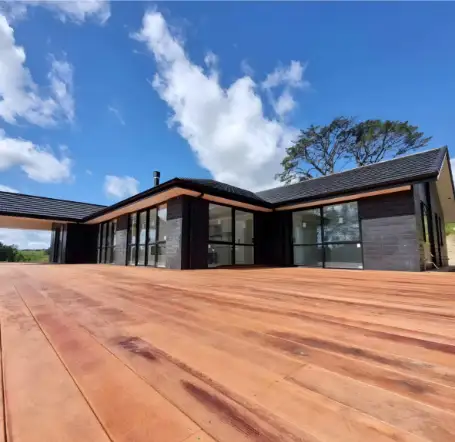
Architectural New Builds
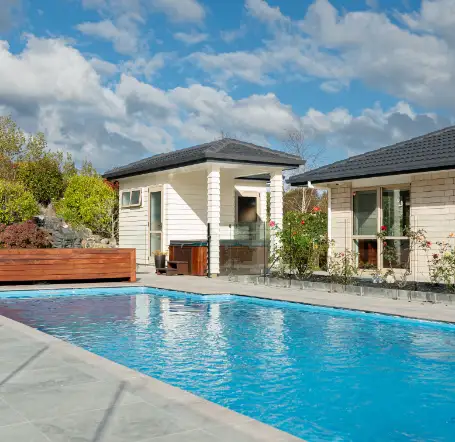
Renovations
Villas & Bungalows
Accreditations & Partners